
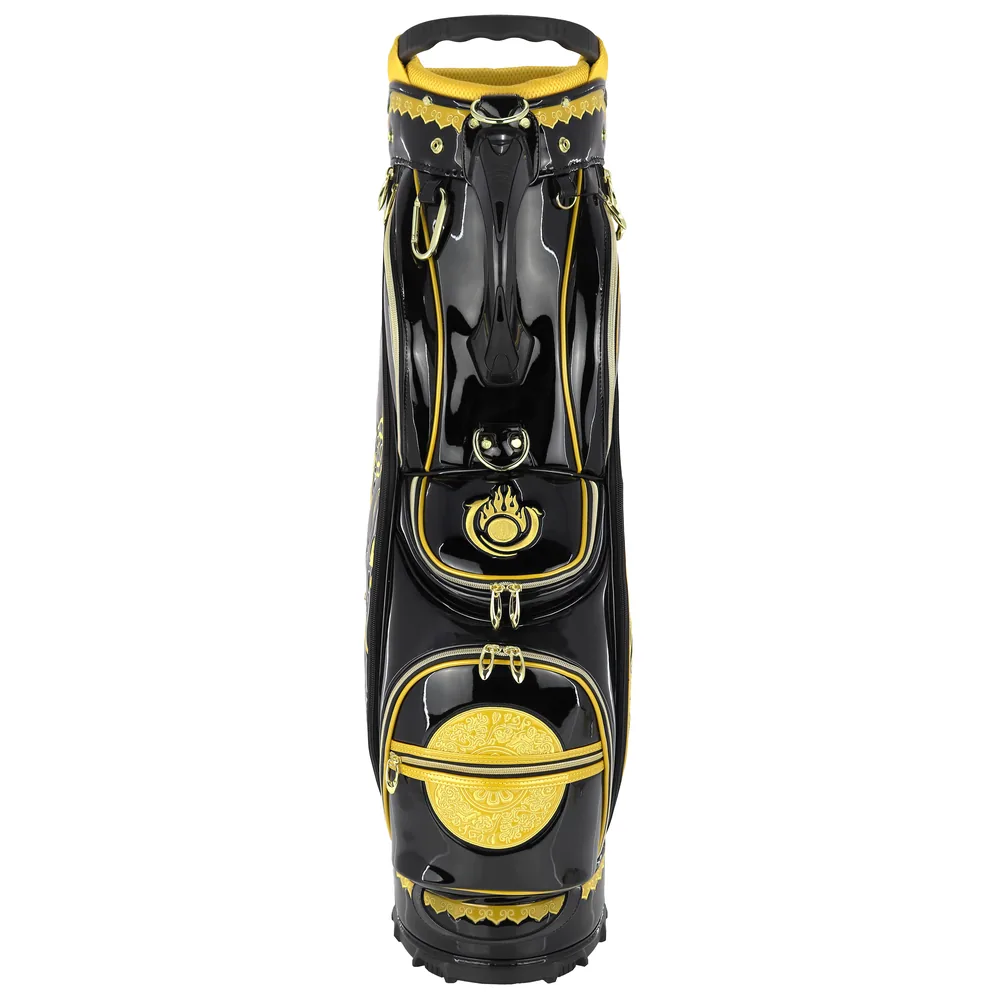
Why do some golf bags last a decade and others fail in a season? It comes down to materials, the stand mechanism and how the bag is put together.
Two golf bags can look almost identical on a shelf and behave completely differently two years later. One still stands square on the first tee; the other has a wobbling leg, a frayed strap and a zip that catches. Durability is not luck — it is built in. Here is what to look for.
The stand mechanism is the first thing to fail
Ask any golfer what annoys them about an old bag and the answer is usually the legs. Cheap stands use plastic pivots that flex, loosen and eventually snap. A premium bag uses metal hinges and a sprung base engineered to open cleanly thousands of times and grip on a slope.
Fabric does the quiet work
The outer material faces rain, sun, cart rails and airport belts. Quality fabric resists abrasion and keeps its colour; budget nylon fades and thins. Seams matter just as much — double-stitched, reinforced stress points are what stop a pocket tearing when it is full.
Hardware you touch every round
- Zips — sealed, corrosion-resistant zips that still glide after a wet season.
- Straps and clips — padded straps and metal-grade clips rather than brittle plastic.
- Dividers — full-length, so shafts never rub against each other.
Why this is the heart of what we do
At Chinoiserie Golf, durability is not an afterthought — it is the starting point. Each bag moves through material selection, cutting, sewing, assembly, finishing and quality control before it ships. You can see the full process on our craftsmanship page.
Buy once, carry for years
A durable bag is cheaper over its life than two cheap ones — and far less frustrating. Explore the collection or browse our signature collections to find one built to go the distance.